

Key Takeaways
Dive headfirst into the enchanting world of Wollongong’s native flora with this comprehensive guide. From the majestic Waratah to the hardy Banksia, this article covers a variety of plants that are not only a feast for the eyes but are also a boon for the local ecosystem. Here’s what you’ll unearth in this botanical journey:
Regal Blooms: Discover the Waratah, the iconic bloom of the Illawarra bushland, and learn how its fiery red flowers and lush foliage can add splendor to your garden while attracting nectar-loving birds.
Coastal Beauties: Explore how Spinifex and Pigface survive sandy shores and how their resilience can inspire your coastal garden design, offering both beauty and environmental benefits.
Fiery Foliage: Marvel at the Illawarra Flame Tree, a spectacular addition to any landscape, with its brilliant display of red blooms that light up like nature’s own fireworks.
Orchid Allure: Step into the delicate world of native orchids with their diverse forms and deep ecological roles. These botanical gems are perfect for gardeners seeking a touch of exquisite charm.
Tough Cookies: Embrace the ruggedness of the Banksia, a stalwart of the Australian coast, and learn how to integrate these tough plants into your own backyard oasis.
Ecosystem Engineers: Appreciate the understated heroes of habitat restoration with shrubs like Lomandra and Acacia, and find out how they can enhance both your garden’s aesthetics and its health.
Each section of this article is packed with handy tips on how to cultivate these native wonders in your own outdoor space, with an emphasis on their adaptability and the ecological perks they bring. So, roll up your sleeves, and let’s transform your garden into a thriving homage to the natural landscape of the beautiful Wollongong region!
Introduction to Wollongong’s Native Flora: Embracing Local Beauty
Wollongong, a coastal city in New South Wales, Australia, is not only famous for its stunning beaches and beautiful landscapes but also for its vibrant native flora. The region is home to a diverse range of plant species that have adapted to the unique coastal and bushland environments of Wollongong. Embracing and cultivating these native plants in your own garden not only adds a touch of local beauty but also contributes to the preservation of the region’s natural habitats.
In this article, we will explore some of the most fascinating and captivating native flora that you can incorporate into your own garden or simply admire in the wild. From the striking Waratah to the delicate native orchids, Wollongong’s native flora offers a kaleidoscope of colors and forms that will surely captivate your senses.
So, why consider embracing Wollongong’s native flora? Apart from their undeniable beauty, these plants are perfectly adapted to the local environment. They have evolved over centuries to withstand the region’s often challenging conditions, such as salt-laden winds, sandy soils, and intermittent rainfall. By choosing native plants for your garden, you’re not only selecting species that will thrive in your specific climate but also minimizing the need for excessive watering, fertilizers, and pesticides.
Furthermore, native plants provide essential habitats and food sources for local wildlife, including birds, butterflies, and bees. By creating a garden with native flora, you’re not only surrounding yourself with beauty but also fostering a balanced ecosystem that supports biodiversity. It’s a win-win situation for both you and the environment!
Throughout this article, we will delve into the unique characteristics and care requirements of various native plant species in Wollongong. From the show-stopping Waratah to the hardy Banksia and the delicate native orchids, we’ll provide you with the information and tips you need to successfully incorporate these plants into your garden or simply appreciate their beauty in the wild.
So, let’s embark on this journey through Wollongong’s native flora and discover the natural wonders that await us!
The Vibrant Waratah: King of the Illawarra Bushland
When it comes to native flora in Wollongong, there’s one plant that truly reigns supreme – the magnificent Waratah. Known as the king of the Illawarra bushland, this vibrant and eye-catching flower is a true icon of the region.
The Waratah, scientifically known as Telopea speciosissima, is a member of the Proteaceae family and is native to the southeastern parts of Australia. Its name is derived from the Aboriginal word “waratah,” which means “red flowering tree.” And indeed, the Waratah is famous for its striking crimson flowers that bloom from late winter through spring, adding a burst of color to the bushland.
But it’s not just the flowers that make the Waratah so special – its unique foliage is equally captivating. The leaves are leathery, dark green, and have a distinct shape, with serrated edges and a lance-like appearance. This foliage provides a beautiful backdrop for the vibrant flowers, creating a stunning visual display.
Caring for Waratahs in your garden is relatively easy, as long as you provide them with the right conditions. They thrive in well-drained soils and prefer a sunny spot, although they can tolerate some shade. It’s important to note that Waratahs are sensitive to frost, so if you live in a colder area, it’s best to provide them with some protection or grow them in pots that can be moved indoors during winter.
When it comes to watering, Waratahs are quite resilient and can handle periods of drought once established. However, they do appreciate regular watering during dry spells, especially in the first few years after planting. Mulching around the base of the plant can help retain moisture and suppress weeds.
If you’re lucky enough to have a Waratah in your garden, you’ll be rewarded with a stunning display of flowers that will attract a variety of native birds and insects. These flowers are a valuable source of nectar, making them a favorite among honeyeaters and other nectar-loving birds.
So, why not add a touch of regal beauty to your garden with the king of the Illawarra bushland? The Waratah is a truly captivating plant that will bring color, elegance, and a touch of Australian heritage to your outdoor space.
Coastal Charm: Exploring Wollongong’s Spinifex and Pigface Species
When you think of coastal landscapes, what comes to mind? Perhaps sandy beaches, crashing waves, and the salty breeze. But did you know that Wollongong’s native flora includes some unique and fascinating plants that have adapted to these coastal environments? In this section, we’ll explore the coastal charm of Wollongong’s Spinifex and Pigface species.
First up, let’s talk about Spinifex. This grass-like plant is a common sight along the sandy dunes of Wollongong’s coastline. With its spiky foliage and ability to withstand harsh conditions, Spinifex is a true survivor. It helps stabilize the sand dunes, preventing erosion and providing a vital habitat for other coastal species.
If you’re considering incorporating Spinifex into your garden, you’re in luck! This hardy plant is relatively low-maintenance and can thrive in sandy soils. It prefers full sun but can tolerate some shade. Just make sure to provide it with well-drained soil and avoid overwatering. With its unique texture and ability to withstand coastal winds, Spinifex is a fantastic addition to any coastal-inspired garden.
Next, let’s delve into the vibrant world of Pigface, also known as Carpobrotus rossii. This succulent plant is native to coastal regions and is often found growing along dunes and cliffs. One of the most striking features of Pigface is its colorful flowers, which range from shades of pink, purple, and yellow. These flowers attract pollinators such as bees and butterflies, adding a touch of life and beauty to the coastal landscape.
Pigface is an ideal plant for coastal gardens, as it is extremely drought-tolerant and can thrive in poor soils. It’s also a great option for rockeries, as it has a trailing habit and can cascade over walls or containers. To care for Pigface, simply provide it with well-drained soil, plenty of sunlight, and minimal watering. This low-maintenance plant will reward you with a burst of color and a touch of coastal charm.
Whether you’re strolling along Wollongong’s beaches or looking to create a coastal-inspired garden, exploring the world of Spinifex and Pigface is a must. These plants have adapted to the challenging coastal conditions and offer a unique and captivating beauty. So, why not embrace the coastal charm of Wollongong’s native flora and bring a touch of the beach to your own outdoor space? Your garden will thank you, and you’ll get to enjoy the beauty of these coastal treasures all year round.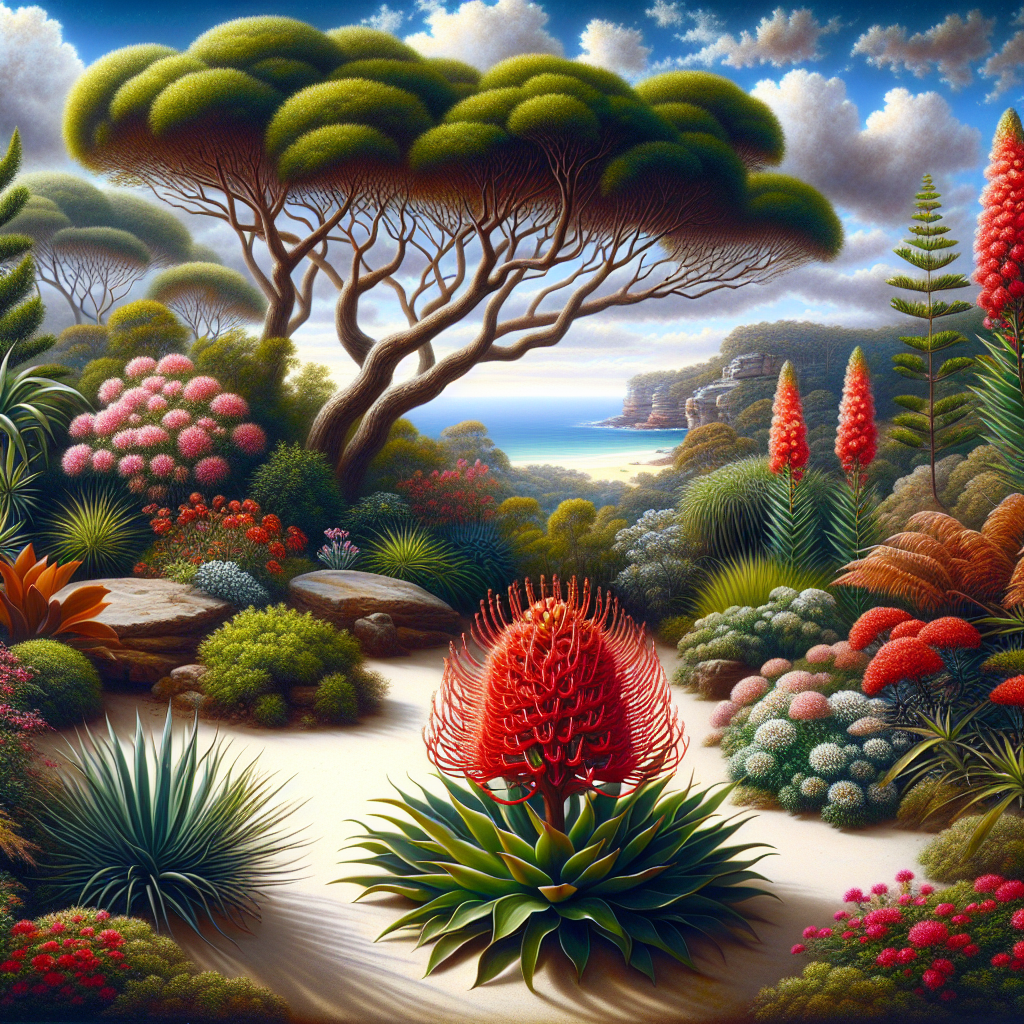
The Illustrious Illawarra Flame Tree: A Fiery Addition to Your Garden
Talking about adding drama to your garden, let’s turn our attention to a showstopper that’s impossible to ignore – the Illawarra Flame Tree (Brachychiton acerifolius). This native marvel, with its striking red blooms, can light up any garden space, making it feel like the bushland’s own version of fireworks.
What makes the Illawarra Flame Tree truly special is not just its vivid red flowers, which appear almost like flames against the green backdrop of its foliage, but also its unique flowering pattern. Unlike most trees that follow a predictable blooming season, the Flame Tree flowers sporadically, often in response to significant changes in weather, such as a dry spell followed by rain. This unpredictability adds an element of surprise and excitement to your garden.
Here’s how to successfully integrate this fiery beauty into your outdoor space:
- Positioning: Choose a spot where the tree can truly stand out. It needs full sun to flourish and ample space as it can grow quite large.
- Soil: The Flame Tree isn’t too picky about soil types but it does prefer well-drained soil. If your garden has heavy clay, consider amending the soil or choosing a raised bed or mound to improve drainage.
- Watering: While establishing, it needs consistent moisture. Once settled, however, it’s quite drought-tolerant. Remember, too much love in the form of water can hinder its splendid flowering.
- Companion Planting: Pair it with other native species that thrive in similar conditions. This not only creates a harmonious look but also supports local biodiversity.
It’s worth noting that the Flame Tree’s leaves are large and lobed, adding to its visual appeal even when it’s not in bloom. And, while it may take a few years to flower for the first time, the spectacle is truly worth the wait.
For gardeners looking to make a bold statement or simply wanting to bring a piece of the Illawarra’s natural beauty into their personal spaces, the Illawarra Flame Tree is an excellent choice. Its fiery blooms not only serve as a conversation starter but also as a reminder of the vibrant ecosystems we are a part of.
So, if your garden could use a bit of drama and color, consider the Illawarra Flame Tree. Not only will you be embracing a piece of local flora, but you’ll also be treating yourself to a seasonal spectacle that few other trees can match.
Discovering the Delicate Diversity of Wollongong’s Native Orchids
Dive into the enchanting world of Wollongong’s native orchids, a group of plants that boasts an extraordinary range of forms, colors, and lifestyles. One might not immediately think of orchids when picturing the rugged Australian bush, but these botanical jewels are as diverse as they are beautiful, offering a special allure to any garden or natural landscape.
The Fascinating World of Native Orchids
- Adaptability: Native orchids are a testament to nature’s adaptability, with some species thriving in the dense underbrush, while others prefer the crooks of trees or open, rocky outcrops.
- Floral Variety: From the dainty, nodding flowers of the Diuris genus, affectionately known as “Donkey Orchids,” to the striking, spaceship-like blooms of the Caladenia genus or “Spider Orchids,” these plants are a delight to discover and observe.
- Ecological Role: Native orchids play a crucial role in the ecosystem, with many species forming symbiotic relationships with local fungi, which is essential for their germination and growth.
Bringing Orchids into Your Garden
If you’re considering adding these delicate beauties to your garden, remember that native orchids are generally not as demanding as their tropical cousins. They often prefer a more laissez-faire approach. Here’s how to care for them:
- Replicate Natural Conditions: Mimic their natural habitat as much as possible. This means well-draining soil, the right balance of sunlight and shade, and protection from harsh elements.
- Stay Natural: Avoid chemical fertilizers and opt for organic matter. Native orchids are used to the nutrients they would naturally get from their surrounding environment.
- Patience: Orchids may take time to establish and bloom. Patience is key, and so is resisting the urge to disturb them too much with overzealous gardening.
When successful, cultivating native orchids can be incredibly rewarding, as you bear witness to their unique flowering processes and contribute to the preservation of these special plants. Plus, they are brilliant conversation starters, with each species having its own fascinating story and place within the Wollongong ecosystem.
So, in your next garden venture, why not consider the understated charm of Wollongong’s native orchids? With a bit of care and attention, these botanical wonders will not only enhance the aesthetic of your garden but also connect you more deeply with the natural heritage of the region.
The Hardy Banksia: Adapting Wollongong’s Coast to Your Backyard
Now, let me spin a yarn about a genuine tough cookie of the plant world and a real Aussie battler—the Banksia. These rugged beauties are like the stoic lifeguards of Wollongong’s coast, braving the salty sea air and thriving where fussier plants might throw in the towel. If you’re keen on bringing a bit of that coastal resilience into your patch, then you’ll be chuffed with what the Banksia can offer.
Meet the Mighty Banksia
- True Blue Aussie: Banksias are as dinky-di as they come, with their serrated leaves and iconic, cylindrical flower spikes that are a buffet for nectar-hungry birds.
- Survival Artists: They’re not only pretty as a picture, but they’re also masters of survival, coping with poor soils and drought like true blue heroes.
Bring a Banksia Back to Your Place
So, you want to give it a burl and plant a Banksia? Good on ya! Here’s the drum on how to get these troopers to salute in your garden:
- Sunbaker’s Dream: Find a sunny spot. Banksias love a good sunbake and will flower their hearts out with plenty of light.
- Easy-Going Soil: They’re not snobby about soil, but they do like it well-drained. Chuck in some native plant mix to give them a kick-start.
- Water Wise: They’re not big drinkers, so a deep watering now and then will keep them happy as Larry. Just don’t let their feet get soggy.
The Banksia Banter
Not only will these Aussie legends give your garden a fair dinkum makeover, but they’ll also be the talk of the town among your local birdlife. You’ll have lorikeets, honeyeaters, and all sorts of feathered mates stopping by for a chinwag and a sip of nectar.
Don’t worry if you’re not up to your elbows in acreage, either. Banksias come in all shapes and sizes, from tall trees to knee-high numbers, so there’s a mate for every garden. Just give them a go and they’ll reward you with a year-round display of tough love and true grit.
So, there you have it, folks. The Banksia is your ticket to a garden that’s as robust as it is beaut. Plant these hearty locals and watch your garden transform into a slice of Wollongong’s coastal paradise. You’ll be as proud as punch!
Restoring Habitats with Native Shrubs: Lomandra and Acacia in Wollongong Environments
While we’ve chatted about some true showstoppers of the Wollongong flora, let’s not overlook the unsung heroes of the plant world—the humble shrubs that are backbone species in our local ecosystems. Lomandra and Acacia are two such champions, not only adding texture and greenery to your garden but also playing a critical role in habitat restoration.
Lomandra: The Tough Companion Plant
- Grass-like Wonder: Lomandra, often mistaken for a tussocky grass, is a resilient, evergreen plant perfect for those tricky spots where nothing else seems to grow.
- Soil Stabiliser: Its robust root system makes it a fantastic choice for erosion control, as it can hold the soil together on slopes and banks.
- Garden Friendly: Providing year-round foliage, Lomandra varieties are also drought tolerant and require minimal fuss—perfect for the low-maintenance gardener.
Acacia: The Golden Glory
Acacia, also known as wattle, is a genus filled with some real stunners. With their distinctive golden puff-ball flowers, they bring a splash of sunshine to any landscape.
- Quick Growers: Acacias grow pretty quickly, which is great if you’re looking to establish a garden fast. Plus, their foliage varies across species, from feathery to broad, offering diverse textures.
- Nitrogen Fixers: They’re not just a pretty face; acacias improve soil quality by fixing nitrogen, which benefits surrounding plants—talk about a good neighbour!
- Wildlife Attractors: The flowers are like a bug’s version of a buffet, attracting all sorts of beneficial insects that help keep your garden’s ecosystem in check.
Planting and Care Tips
Whether you opt for Lomandra or Acacia, or why not both, here’s how to give them a solid start:
- Location: Full sun to partial shade is the go-to for these shrubs. Check the specific needs of the species you’ve chosen, as some might prefer one over the other.
- Soil Prep: They’re not fussy, but well-draining soil will keep them from getting waterlogged feet.
- Watering Wisdom: Establish them with regular watering at first, and once they’ve set their roots, they’ll be good to go with whatever the weather throws at them.
Conclusion
From the regal Waratah to the sturdy Banksia, and now the indispensable Lomandra and Acacia, embracing Wollongong’s native flora is not just about beautification. It’s a solid step towards ecological mindfulness, conservation, and creating a space that reflects the natural beauty of the Illawarra region. Each of these plants, with their unique qualities, contributes to a garden that is not only stunning to look at but is also a haven for local wildlife, and a patch of genuine Australian bushland you can call your own. So go on, invite these local legends into your garden and watch as it transforms into a thriving ecosystem that celebrates the natural diversity of Wollongong’s remarkable landscapes.