
Introduction:
Bolboschoenus medianus, commonly known as the Marsh Club-Rush, is a remarkable aquatic plant native to Australia. This article aims to shed light on the characteristics, habitat, ecology, and potential uses of this intriguing species.
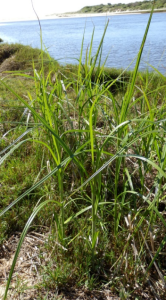
Bolboschoenus medianus is a perennial sedge to 1.5m tall with a creeping rhizome (underground stem). It is common along the banks of the Capel River. This is a priority flora.
Bolboschoenus medianus is a dominant sedge along the Capel River but its distribution is restricted in Western Australia, only being recorded from 3 locations (see also Bolboschoenus medianus). It also occurs in South Australia, New South Wales, Victoria and Tasmania.
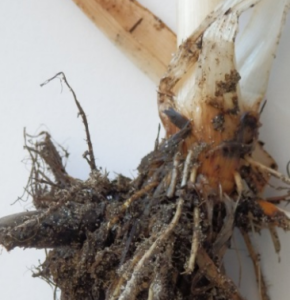
Bolboschoenus is derived from the Greek bolbos a bulb and schoinos a rush referring to the round rhizomes and medianus from the latin medius meaning middle. It is a perennial sedge up to 1.5m tall often forming dense stands which can be seen in such places as along sides of the rivers. It has a creeping rhizome and 3-angled stems.
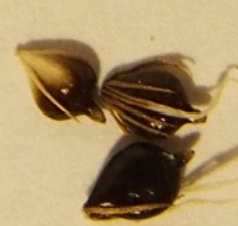
The leaves are recurved towards the tips with a blade up to 50cm long and 8mm wide. The inflorescence is a cluster of several stalkless and stalked spikelets. Each spikelet is brown up to 2cm long with many bisexual flowers. The glumes are about 1cm long with jagged margin and a distinct keel that terminates in a recurved spine-like tip. The seed is black + 3-angled, up to 4mm long and smooth on the surface. This is a significant species as it is listed by the Department of Parks and Wildlife as a Priority One Flora –
which indicates that it is only known from a few, usually less than 5 populations, all of which are under immediate threat.
Priority 1 Flora are candidates for declaration as rare flora but are in need of further survey. None of these plants can be removed without first obtaining permission from the Department of Parks and Wildlife.
Taxonomy and Appearance:

Bolboschoenus medianus belongs to the Cyperaceae family and can be identified by its unique features. It typically grows in dense clumps or colonies and possesses slender, erect stems that can reach up to one meter in height. The plant’s leaves are narrow and grass-like, providing an aesthetic appeal to its surroundings.
Habitat and Range:
This species primarily thrives in freshwater wetlands, including shallow swamps, lagoons, and lake margins. Bolboschoenus medianus displays a remarkable adaptability to a wide range of water depths, from fully submerged to wet soil surfaces. It is indigenous to Australia and can be found in various parts of the country, particularly in the southern regions.

Ecology and Adaptations:
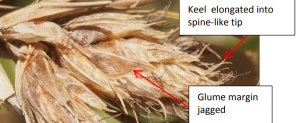
recurved spine-like tip. The keel is an obvious raised vein along the centre of the glume.
The Marsh Club-Rush plays a crucial role in maintaining the ecological balance of wetlands. Its extensive root system helps stabilize the soil and prevent erosion, while also providing habitat and food for a variety of aquatic organisms. The dense foliage provides shade, reducing water temperature and preventing excessive algal growth. Additionally, this species acts as a natural filter, absorbing excess nutrients and pollutants, thus improving water quality.
Reproduction and Life Cycle:
Bolboschoenus medianus reproduces through both vegetative and sexual means. It produces small, inconspicuous flowers arranged in clusters atop slender stalks. These flowers eventually turn into small brown or black nut-like fruits, containing seeds for reproduction. Its ability to propagate through rhizome fragmentation allows it to colonize new areas rapidly.
Uses and Benefits:
The Marsh Club-Rush has several practical applications due to its unique characteristics. Its adaptability to wetland conditions makes it an ideal choice for wetland rehabilitation and restoration projects. Additionally, it aids in the natural purification of water bodies, thus enhancing their ecological value. The plant’s dense growth offers habitats for various aquatic organisms, attracting birds and other wildlife. Moreover, the leaves and stems of Bolboschoenus medianus can be used for basket weaving and craft activities, providing cultural and economic benefits.
Conclusion:
Bolboschoenus medianus, or the Marsh Club-Rush, is an indigenous aquatic plant that plays a crucial ecological role in freshwater wetlands across Australia. Its adaptability, habitat stabilization, and water purification properties make it an invaluable component of wetland ecosystems. Moreover, its practical applications for wetland restoration and traditional crafts highlight its significance for both environmental and societal well-being. Understanding and appreciating the value of this remarkable plant is essential for effective conservation and sustainable management of wetland environments.