
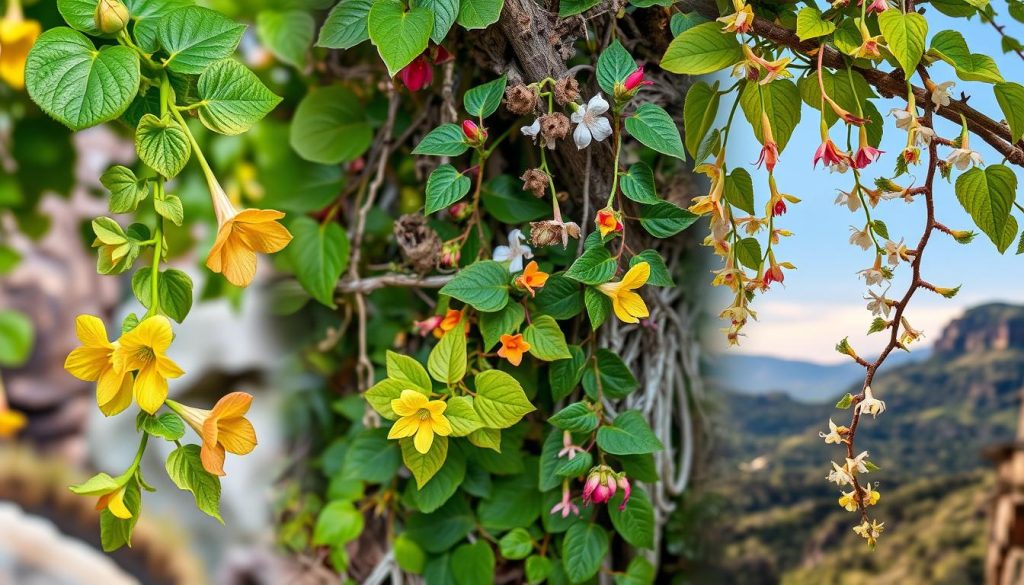
Transform your outdoor spaces with living artworks that climb, twist, and bloom. Australia’s unique climbing species offer more than beauty—they’re problem-solvers for gardens needing privacy screens, shade providers, or vertical accents. These green wonders thrive in tough conditions, making them ideal for modern landscapes.
From fences to pergolas, climbing plants like Pandorea jasminoides and coral pea varieties add bursts of colour while softening hard surfaces. Their flexible growth habits let them adapt to containers, trellises, or sprawling ground covers. Many species flower generously, attracting birds and pollinators through warmer months.
What makes these climbers stand out? They’re built for Australia’s climate. Deep root systems help them survive dry spells, reducing watering needs during scorching summers. Their leaves often have clever adaptations like waxy coatings to retain moisture—perfect for eco-conscious gardeners.
This guide explores how to use climbing plants effectively. You’ll learn design tips, care strategies, and ways to combine different growth styles. We’ll also highlight standout species that bring both practicality and visual drama to your space.
Key Points to Remember
- Vertical growers maximise space while adding natural privacy screens
- Drought-resistant varieties thrive in hot summers with minimal watering
- Flowering types like coral pea create seasonal colour bursts
- Adaptable growth suits containers, walls, or ground coverage
- Native species support local ecosystems and birdlife
Introduction: The Beauty and Role of Native Climbers
Climbing plants turn ordinary gardens into vibrant, living tapestries. These green architects shape spaces while supporting local wildlife, creating ecosystems where flowers and creatures thrive together.
Nature’s Vertical Problem-Solvers
Many species, like the Hardenbergia (also known as coral pea), excel at covering fences or pergolas. Their spring blooms paint walls purple or white, lasting through summer. Sturts desert pea, another star performer, dazzles with red flowers that attract hummingbirds.
| Species | Sun Needs | Soil Type | Key Benefit |
|---|---|---|---|
| Native Jasmine | Partial shade | Well-drained | Fragrant flowers |
| Coral Pea | Full sun | Sandy loam | Drought resistance |
| Wonga Vine | Filtered light | Moist clay | Quick coverage |
Smart Gardening Made Simple
Most vines adapt to various soil types, from sandy coastal earth to richer garden beds. They need at least 4-6 hours of sun daily for optimal flowering. Spring planting lets roots establish before summer heat.
Beyond beauty, these plants cool hot surfaces and reduce soil erosion. Their dense foliage creates natural privacy screens, while flowers feed pollinators. Choose species matching your space – vigorous growers for large walls, compact types for containers.
Exploring west australian native climbers in Detail
Vertical gardens become ecological masterpieces when using clever species that dazzle across seasons. Let’s meet the standout performers that bring walls and fences to life while thriving in diverse settings.
Showcase of Iconic Species and Their Unique Traits
Pandorea jasminoides stuns with trumpet-shaped blooms from spring through autumn. Its glossy leaves stay vibrant even in dry spells. For shady spots, the dusky coral pea (Hardenbergia violacea) drapes fences with purple blossoms resembling tiny orchids.
| Plant | Colour Palette | Ideal Conditions |
|---|---|---|
| Sturts Desert Pea | Ruby red with black centers | Full sun, sandy soil |
| Native Grapes | Deep green foliage | Partial shade, moist areas |
| Tecomanthe Hillii | Pink winter blooms | Sheltered spots, rich soil |
Adaptations from Rainforests to Arid Landscapes
Rainforest species like wonga vine develop thick leaves to capture scarce light. Desert dwellers such as Sturts desert pea store water in tuberous roots. Many adjust leaf angles to reduce sun exposure during peak heat.
Listicle Highlights: Must-Grow Varieties
- Dusky Coral Pea: Spring flowers in lavender shades, thrives in both sun and dappled areas
- Pandorea ‘Golden Showers’: Butter-yellow blooms attract honeyeaters for months
- Native Jasmine: Fragrant white stars perfect for pergolas in humid zones
These natural climbers solve design challenges while supporting local ecosystems. Their seasonal changes create living art that evolves through the year, offering new surprises with each blooming cycle.
Cultivation Tips and Garden Design Ideas
Bring vertical gardens to life with smart care techniques that highlight their natural charm. Whether training a creeper over an arbour or shaping foliage into living curtains, success starts with understanding your plant’s needs.
Watering, Soil, and Fertiliser Best Practices
Deep watering every 7-10 days during summer encourages strong roots. Add 5cm of mulch to lock in moisture during drought periods. Test soil pH first—most species thrive in slightly acidic conditions (6.0-6.5).
Mix compost into planting holes to boost fertility. For nutrients, organic slow-release pellets like Osmocote Native work wonders. Apply in early spring as new growth appears. Rooting hormones help cuttings establish faster—try Yates Clonex for woody stems.
Trimming, Pruning, and Support Strategies
Prune after flowering to maintain shape and encourage bushier growth. Use clean secateurs to remove dead wood and tangled stems. For pergola training, loosely tie vines with biodegradable twine until they grip naturally.
Sturdy supports prevent damage from wind or heavy fruits. Metal grids suit fast-growing creepers, while timber lattices complement delicate foliage.
“Strategic pruning reveals a plant’s structure while boosting flower production,”
notes landscape designer Mia Thomson.
| Task | Tool | Frequency |
|---|---|---|
| Soil testing | pH meter | Seasonal |
| Fertilising | Liquid seaweed | Monthly (spring-summer) |
| Pest control | Neem oil spray | As needed |
Design tip: Let ground-covering varieties sprawl between pavers for pops of colour. Pair flowering types with evergreen foliage plants to create year-round interest. A well-supported creeper isn’t just practical—it becomes a living sculpture that evolves with the seasons.
Conclusion
Transform your space with greenery that grows smarter, not harder. These natural creepers blend striking beauty with practical perks, offering solutions for fences, pergolas, and shaded trees. Their secret? Built-in resilience that thrives in diverse soils and climates, from coastal sands to sheltered rainforests.
Smart care keeps them flourishing. Occasional pruning shapes growth while encouraging denser foliage. Well-draining soils and seasonal feeding support vibrant blooms like those of Hardenbergia violacea. Whether softening walls or framing entryways, selecting species suited to your conditions ensures success.
What truly sets these plants apart is their lasting power. Many varieties thrive for years, adapting as your garden evolves. They’re living proof that eco-friendly design can dazzle while requiring less water and maintenance.
Ready to reimagine your outdoor areas? Start with one adaptable creeper and watch how vertical greenery transforms ordinary spaces into thriving ecosystems. Explore our detailed guides to find your perfect match!