
Introduction:
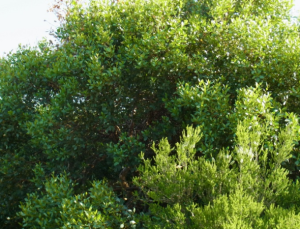
Eucalyptus utilis, commonly known as the Coastal Moort, is a mallee to 6m tall. It occurs between Albany and Esperance in Western Australia.
Eucalyptus Utilis: The Useful Eucalyptus
Eucalyptus Utilis, commonly known as coastal moort or coastal white mallee, is a species of mallee that is endemic to the south coast of Western Australia. As its common names suggest, it grows in coastal regions and has a whitish, powdery bark that peels off in strips. This hardy plant has long been valued by indigenous Australians for its many useful properties.

cap) is horn-shaped, narrower than the base of the bud.
Description
Eucalyptus utilis is a sprawling mallee that typically grows to a height of 1-5 meters. It has a lignotuber at its base from which it can resprout after fire. The grayish-green leaves are narrow, lance-shaped and measure 5-12 cm long by 0.7-1.5 cm wide. The white flowers bloom from September to November and produce woody, urn-shaped fruit capsules.
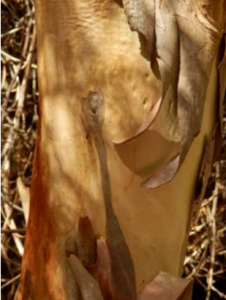
The most distinctive feature of E. utilis is its powdery white and gray bark that sheds in strips to reveal new layers underneath. This “minni ritchi” bark serves an important function, reflecting heat and protecting the shrub from intense coastal sunlight and fires.

Habitat and Range
Eucalyptus utilis occurs in coastal regions of southwestern Australia, primarily near the Stirling Range and Two Peoples Bay Nature Reserve east of Albany. It grows on sand plains, low dunes and limestone ridges within 30 km of the ocean. Its habitat is dominated by low coastal heath and it thrives in sand soils over limestone.
Uses for Indigenous Australians

For thousands of years, E. utilis has been an extremely beneficial plant for the Indigenous peoples of southwestern Australia. The Noongar people know it as moort and use it for numerous purposes.
The leaves produce a powerful eucalyptus oil that works as an insect repellent, natural disinfectant and is soothing for respiratory ailments. Noongar people crush and inhale the leaves to relieve congestion and colds. The oil also helps heal cuts, sores and skin infections if applied topically. Extracts from E. utilis leaves have proven antimicrobial properties.
The bark is flammable and useful for making fires, even in wet conditions. It also makes durable, weatherproof coverings for humpies (shelters) that shield from wind and rain. The inner bark produces a red-brown dye for coloring animal skins and other materials.
This eucalyptus species provides abundant nectar for bees and possums. Noongar people harvest the sweet sap and chew on its gum for nutrition. The edible roots are a good source of starch. Wildlife is more abundant around stands of E. utilis, so it attracts animals for hunting.

Conservation Status
Eucalyptus utilis was once threatened by land clearing for agriculture, but its conservation status is now considered secure. Many large, healthy stands persist, though more surveys are needed to fully assess population sizes. Ongoing climate change may threaten E. utilis if increases in aridity substantially alter its coastal habitat. More frequent wildfires also have the potential to damage populations.
Sustainable harvesting of E. utilis by Indigenous people continues and has low environmental impact. However, commercial over-exploitation of the species for eucalyptus oil production could become a concern for conservation in the future. Careful management is needed to prevent degradation of existing habitat.
Conclusion
Eucalyptus utilis is an ecologically and culturally important plant endemic to the south coast of Western Australia. For millennia, it has served as a versatile resource for Noongar and other Indigenous peoples. They expertly utilized E. utilis for food, medicine, tools and shelter in a sustainable manner. As a hardy species well-adapted to its coastal habitat, E. utilis will remain a useful plant long into the future if properly conserved. Its heritage of indigenous use is a model for how human societies can sustainably interact with native plant species.