

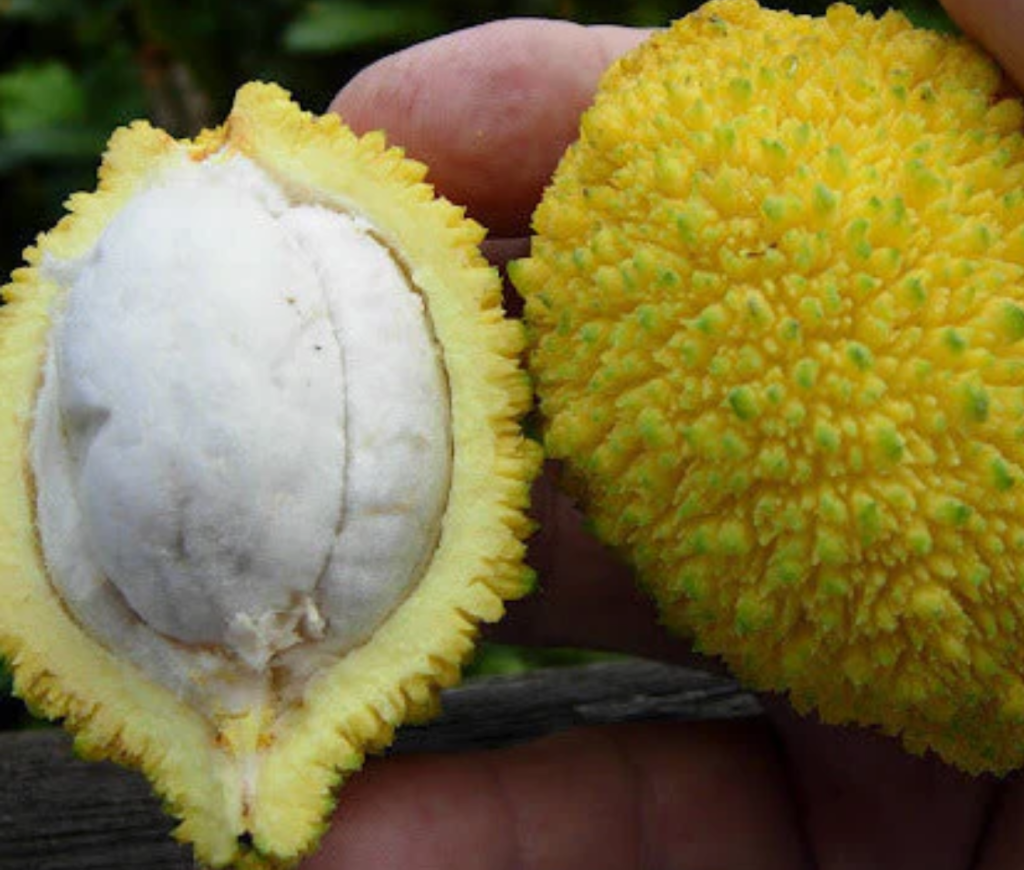
Garcinia madruno, commonly known as madruno or charichuela, is a fascinating tropical fruit tree native to the Eastern Amazonian region. This lesser-known member of the Clusiaceae family offers a unique and delightful fruit experience, making it a prized addition to tropical fruit enthusiasts’ collections.
Origin and Distribution
Native to the non-flooded tropical lowlands of the Eastern Amazon, Garcinia madruno has spread its roots to various parts of Central and South America. It thrives in:
- Costa Rica
- Panama
- The Guianas
- Venezuela
- Andean regions (up to 1200m elevation)
While not widely known outside its native range, this exotic fruit has found its way to Florida, USA, piquing the interest of rare fruit growers.
Growing Conditions
Garcinia madruno adapts well to various tropical and subtropical climates:
- Annual rainfall: 1000-3000mm
- Tolerates prolonged dry seasons
- Prefers well-drained sandy soils but adapts to most soil types
Tree Characteristics
- Evergreen understory tree with apical dominance
- Height: Up to 25m in native habitat, 6-10m in cultivation
- Dense crown with distinctive foliage
- Leaves: Simple, entire, opposite, elliptical to oblong, coriaceous, and glabrous
- Leaf size: 6-16 cm long, 4-6 cm wide
- Distinct marginal leaf vein
- Juvenile leaves have a pale bronze color
Flowering and Fruiting
- Andromonoecious species (both male and bisexual flowers on the same plant)
- Inflorescences appear as fascicles on young branches
- Flowers: Fragrant with creamy-white petals and numerous light yellow stamens
- Bisexual flowers have fewer stamens than male flowers
Cultivation and Propagation
- Primarily propagated by seeds (recalcitrant)
- Rapid germination and early growth in suitable media
- Grafting on own rootstocks is uncommon
- Reports of incompatibility between varieties
Potential for Development
Despite its unique characteristics, Garcinia madruno remains largely underdeveloped as a commercial fruit crop. There’s significant potential for:
- Selection of superior varieties
- Improved cultivation techniques
- Market development for this exotic fruit
FAQ: Garcinia madruno
Q1: What does the Garcinia madruno fruit taste like?
A: The fruit has a unique flavor often described as a mix of citrusy and sweet, similar to a lemony cotton candy or a sweet santol fruit.
Q2: How long does it take for a Garcinia madruno tree to bear fruit?
A: While specific data for Garcinia madruno is limited, related species typically take 5-7 years to begin fruiting when grown from seed.
Q3: Can Garcinia madruno be grown in containers?
A: Yes, it can be grown in large containers, which is ideal for regions with colder winters where the plant needs to be moved indoors.
Q4: Is Garcinia madruno frost-tolerant?
A: No, it’s a tropical species and is not frost-tolerant. Young plants especially need protection from cold temperatures.
Q5: Are there any known medicinal uses for Garcinia madruno?
A: While research is limited, some Garcinia species are known for their medicinal properties. However, always consult with a healthcare professional before using any plant for medicinal purposes.
Q6: How can I tell when Garcinia madruno fruits are ripe?
A: The fruits are typically ripe when they turn yellow and slightly soft to the touch. They may also emit a subtle fragrance when fully ripe.
Q7: Are there any pests or diseases that commonly affect Garcinia madruno?
A: While generally hardy, Garcinia madruno can be susceptible to root rot in poorly drained soils. It may also be affected by common tropical fruit pests like scale insects or mealybugs.
This improved content provides a comprehensive overview of Garcinia madruno, highlighting its unique characteristics, cultivation requirements, and potential for development. The added FAQ section addresses common questions that potential growers or enthusiasts might have about this intriguing tropical fruit tree.
Citations:
[1] https://en.wikipedia.org/wiki/Garcinia_madruno