
The list below contains a small number of local native plants that can be propagated from local cuttings or seeds and, having been tried in local gardens around Canberra, are now growing happily in place. They are a selection from a much larger group that could be successful and provide both beauty for the gardener and habitat for local critters.
Gardening is meant to be relaxing and fun and the fun thing about these plants is to try and find the right place in the garden for you and the plant. We have found that most of these will grow with an initial watering regime to allow them to be established under almost any conditions. Being local they are used to the vagaries of local soils and climate and some of us have found that they will grow in even the most degraded post-construction situation on a suburban block. After all, buried concrete has been found on a suburban block long after the house has been built.
We have tried to select a small number of local native plants from the Canberra area which are fairly representative of vegetation structure, trees, shrubs, grasses and what we have called understorey plants, as well as the floral diversity that many people require to make the effort worthwhile. Understorey in this instance simply means those small but showy plants, such as daisies, that are often overlooked, but play a role in making a garden look interesting, filling in the gaps between the shrubs, trees and grasses. This is what they do in the wild and this is their appropriate role in the suburban garden.
In some cases plants that are usually quite small in the wild will grow to a decent size in a garden, given enough space. This is something you have to think about with local native plants if you want a certain effect. Small native plants, particularly grasses and understorey plants, need space to show their true worth. Believe it or not, what appear to be inoffensive local native shrubs which are not that threatening in their early lives can actually shade out anything after they get going.
All of these have a role to act out in the play that you write. You can vary the mix depending on the effect you want. Alternatively, the shrubs can fill the almost traditional role of a screen while the grasses and understorey plants utilise the middle ground. This is going to be affected by the amount of space you have, perhaps the most important issue in this age of varying block sizes. It’s over to you. Ask the local growers about possibilities.
Options For Trees
Allocasuarina verticillata
Syn Casuarina stricta. Tree 6mH x 5mW. Spreading habit with drooping branches and attractive furrowed bark. Female has fluffy flowers March-December and woody cones. Hardy in most sites and conditions.
Acacia implexa
Small tree 4-6mH x 4mW. Long curved foliage. Pale yellow ball flowers in autumn with curved and twisted pods. Well drained soils in full or filtered sun. A hardy species which tolerates dryness.
Shrubs
Acacia rubida
Tall shrub or small tree 3-5mH x 3-5mW. Red stems and light green foliage, often with divided juvenile leaves present. Profuse yellow ball flowers in spring. Most soils in sun or part shade. Tolerates dryness.
Bursaria spinosa
Erect spiny shrub 2.5mH x 1.5mW with small oval leaves, felted beneath. Dense heads of small white fragrant flowers in summer. Very hardy in a wide range of soils and conditions. Attractive to butterflies.
Mirbelia oxylobioides
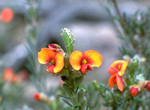
Variable shrub to 1.5mH x 1mW. Small stiff hairy leaves and orange yellow pea flowers in late spring and early summer. Well drained soils in part shade or full sun. Withstands dry periods. Grows under trees.
Dillwynia sericea
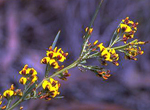
Small shrub 0.6-0.8mH x 0.6-0.8mW with small narrow leaves. Yellow and red pea flowers in spring and summer. Well drained soils in part shade or full sun. Withstands dry periods. Grows under trees.
Daviesia mimosoides
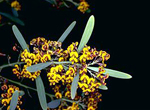
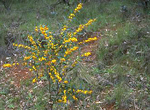
Medium shrub to 2.5mH x 2mW. Elliptic wattle like leaves. Yellow and red pea flowers September-December. Attractive triangular seed pods. Well drained soils in dappled shade or part sun. Good under trees. Very showy.
Grevillea lanigera
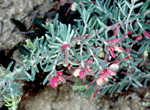
Small shrub 0.5-1mH x 1mW with rounded habit. Woolly grey leaves, red and cream flowers in winter-spring. Very adaptable to a variety of conditions. Attracts birds.
Small Understorey Plants
Lomandra longifolia
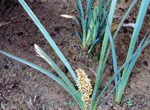
A dense tussock plant 0.5-1mH x 0.6-1mW. Creamy flowers from August-December and then brown, shiny fruits. Good drainage in most soils with some sun. Feature with shrubs or accent plants with grasses.
Brachyscome rigidula
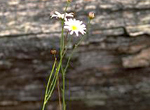
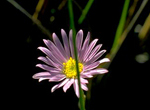
Small perennial herb 0.4mH x 0.5mW. Fine divided leaves. Mauve flowers for long periods. Good in heavy clay soils in full or part sun. Plant in groups for dense effect. Prune old stems in early spring.
Chrysocephalum apiculatum
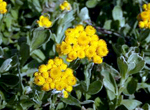
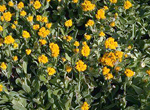
Small perennial herb. Variable, to around 0.2mH x 0.5mW. Depending on form, silver to silvery green leaves. Clusters of small golden flowers all the year. Reasonable drainage and sun. Prune in early spring. Good in massed plantings.
Calocephalus citreus
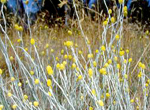
Small perennial herb 0.2-0.5mH x 0.3-1mW, attractive silvery grey foliage, bright yellow flower heads Oct-Feb. Wide range of soil conditions with adequate drainage. Likes part to full sun. Dies back in winter.
Xerochrysum viscosum
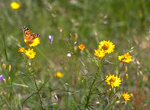
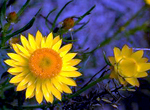
Syn Bracteantha viscosa. Perennial daisy 0.7mH x 0.5mW with sticky linear leaves. Yellow papery flowers in spring-summer. Suits most soils and aspects. Prune away old stems in early spring.
Wahlenbergia communis
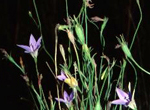
Local ACT bluebell, forming clumps about 0.3mH x 0.5mW with slender leaves and stems. Masses of light blue flowers spring-summer. Sunny sites. Grows in most situations but responds to better conditions. Dies back in winter.
Grasses
Austrodanthonia carphoides
Syn Danthonia carphoides. Short Wallaby Grass. Small perennial grass forming short tufts 0.1-0.3mH. Spikelets green to purple, straw coloured and hairy with age.
Themeda triandra
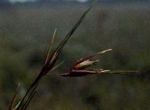
Syn Themeda australis. Kangaroo grass. Forming clumps with short leaves, bluish when young, reddish when older, particularly in winter. Flowers and seed heads to 1mH, above leaves. Most soils in sun.