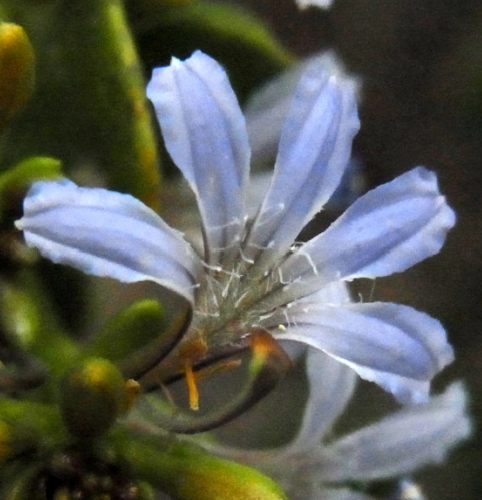
Scaevola crassifolia, commonly called the thick-leaved fanflower, is a showy Australian native shrub (from WA) well-suited to challenging coastal environments. With pretty lavendar blue fan-shaped flowers (sometimes white) and the ability to withstand heat, drought, and salt spray, this scaevola species makes an excellent garden plant for beachy and seaside plantings.
In this in-depth article, we’ll explore Scaevola crassifolia’s key features and provide tips for incorporating it successfully in your own landscape. We’ll cover ideal growing conditions, recommended cultivars, and care requirements. We’ll also look at how S. crassifolia compares to other popular Australian scaevola species. Read on to learn all about this hardworking native!
Overview and Description of Scaevola crassifolia

Scaevola crassifolia, also known by its synonym Scaevola chloroclada, is an erect shrub in the Goodeniaceae family native to southern Western Australia and South Australia. This Australian native occurs naturally along the sandy coastal regions. It grows to about 1-1.5 meters (3-5 feet) tall with an equal spread.
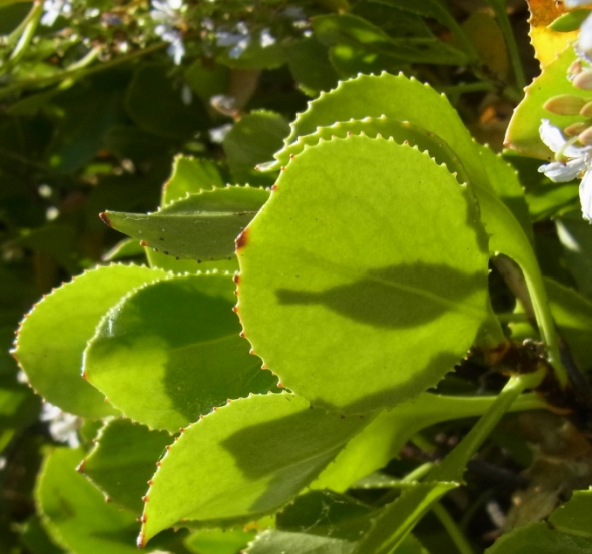
The thick, fleshy green leaves inspired the common name. They are oval-shaped, rounded at the ends, and arranged alternately along flexible stems. From late spring into summer, the shrub produces pretty five-petaled flowers with a fan shape. Flower color ranges from white to pale purple. The flowers appear at the branch tips atop the foliage.
This scaevola species is one of the most tolerant native plants when it comes to coastal and seaside conditions. It thrives right on the foredunes and tolerates full exposure to salt spray and onshore winds. The extensive root system also enables it to flourish despite sandy, fast-draining soils and drought. Let’s look at exactly how to grow this tough plant.
As an Australian plant in its natural environment, It is found growing in Perth Western Australia, found widely in coastal areas such as on the Fremantle, Swan coastal plain, Dampierland, Pilbara, Carnarvon, Hampton, Joondalup, Rockingham, Esperance plains, Geraldton sandplains, Yalgoo, Carabooda, Warren, Jarrah Forest, Chapman Valley and Cottesloe just to name a few.
Growing Conditions for Scaevola crassifolia
This adaptable native plant grows under the following conditions:
- Sun: Thrives in full sun. Tolerates several hours of light shade. Plant in a sunny position.
- Soil: Sandy, sandy loam, or gravelly soils. Requires well drained soil.
- Drought tolerance: Extremely drought tolerant once established. Avoid overwatering.
- pH: Prefers neutral to slightly alkaline soil.
- Salt tolerance: Highly salt tolerant. Thrives with constant salt spray exposure.
- Wind tolerance: Excellent tolerance of onshore winds and gales.
When sited appropriately, S. crassifolia is easy care with minimal maintenance required. Avoid frost pockets and overly humid areas for best performance.
How to Use Scaevola crassifolia in the Landscape
This versatile shrub lends well to various applications:
- Coastal gardens – Excellent for oceanfront locations and stabilizing and regeneration of coastal dunes. Withstands salt and wind.
- Erosion control – The extensive root system prevents erosion on dunes, banks, slopes, roadsides, and other areas. Plants found in protected positions can reach around 1 meter in height, while those in exposed positions are much lower in height.
- Mass plantings – Use in mass as a hardy groundcover. Provides weed suppression.
- Containers – Works well in pots and planter boxes. Allow soil to dry between waterings.
- Edging – Low maintenance edging for curbing beds and borders.
- Dry gardens – Adds color and groundcover to drought-tolerant and native gardens, so makes a useful garden plant.
Scaevola crassifolia is a workhorse in landscapes where many other plants fail. Let’s look at how to grow and care for it.
How to Plant and Care for Scaevola crassifolia
Here are some tips for successfully establishing this scaevola in your garden:
- Select a sunny, fast-draining spot. Amend sandy or clay soils with compost.
- Space plants 18-24 inches apart for a dense bushy effect. Allow room for spread.
- Water regularly for the first few months until deep roots develop. Then water only during drought.
- Apply slow release native plant fertilizer a couple times per year to encourage growth.
- Prune lightly after flowering to stimulate bushy, compact growth. Avoid heavy pruning.
- Propagate from semi-hardwood tip cuttings taken during summer.
With proper siting and minimal care, S. crassifolia will thrive indefinitely in your garden. Next let’s compare it to other Scaevola species.

How Scaevola crassifolia Compares to Other Species
The Scaevola genus includes over 100 species, most native to Australia. How does Scaevola crassifolia differ from some other popular Scaevola varieties grown in gardens?
Scaevola aemula (Fairy Fanflower)
- Reaches just 60cm (2 feet) high – much smaller than S. crassifolia
- Features dainty white or pale purple flowers with yellow centers
- Prefers well-drained but evenly moist soil
Scaevola amblyanthera
- Prostrate groundcover, not an upright shrub like S. crassifolia
- Smaller white flowers with yellow centers
- Native to northwestern Australia – different range
Scaevola albida (White Fanflower)
- Also coastal native but lower growing, around 60cm (2 feet) high
- Distinctive white flowers with purple markings
- Prefers lime-free soil unlike lime-tolerant S. crassifolia
So in summary, S. crassifolia stands out with its larger size and showy flowers on upright stems held above the foliage. It also has exceptional resilience to wind, salt spray, drought, and poor sandy soil, unlike more delicate scaevola species requiring milder conditions. For challenging coastal gardens, S. crassifolia is a top performer.
Key Features and Attributes
What makes the thick-leaved fanflower such a great choice?
- Tolerates extreme heat, wind, salt spray, and drought
- Produces loads of pretty purple and white fan-shaped blooms
- Handles nutrient-poor sandy or gravelly soil
- Grows quickly to form a dense bushy shrub
- Works well as a groundcover or specimen planting
- Features succulent foliage that withstands harsh conditions
- Stabilizes dunes and prevents erosion on banks
- Ideal for pollinators with its many flowers
- Requires minimal irrigation and fertilizer once established
- Attractive year-round even when not in flower
- Long-blooming from late spring into summer
These characteristics make Scaevola crassifolia a real workhorse in coastal and seaside garden settings.
FAQ
Q: What is Scaevola crassifolia?
A: Scaevola crassifolia, also known as the Australian Hardy Coastal Thick-Leaved Fan flower, is a type of flower native to Australia.
Q: How would you describe the characteristics of Scaevola crassifolia?
A: Scaevola crassifolia is a thick-leaved fan flower with hardy qualities.
Q: Where is Scaevola crassifolia commonly found?
A: Scaevola crassifolia is commonly found in coastal conditions, particularly on coastal dunes.
Q: What is the height of Scaevola crassifolia?
A: Scaevola crassifolia can reach a height of around 1.5 metres.
Q: Can I find more information about Scaevola crassifolia on Wikipedia?
A: Yes, you can find more information about Scaevola crassifolia on its Wikipedia page.
Q: Where can I find a fact sheet about Scaevola crassifolia?
A: You can find a fact sheet about Scaevola crassifolia on the Florabase website.
Q: Does Scaevola crassifolia prefer cooler regions for flowering?
A: No, later flowering can be expected in cooler regions. Generally flowers from winter to summer.
Q: Can Scaevola crassifolia withstand constant sand and salt exposure?
A: Yes, Scaevola crassifolia is able to withstand constant sand and salt exposure.
Q: Are there any specific growing requirements for Scaevola crassifolia?
A: Scaevola crassifolia is often found in protected positions, but it can also grow in exposed positions, although it will be much lower growing in those conditions.
Q: Is it possible to purchase Scaevola crassifolia seeds?
A: Yes, it is possible to purchase Scaevola crassifolia seeds from a nursery.
Q: Is Scaevola crassifolia simmilar to Scaevola aemula (sometimes called Scaevola mauve cluster)?
A: Scaevola crassifolia and Scaevola aemula (sometimes called Scaevola mauve cluster) are two different species of Scaevola with distinct characteristics and growing requirements. While both are species of Scaevola, they have notable differences:
- Size: Scaevola crassifolia grows to about 1-1.5 meters (3-5 feet) tall and 3 meters wide, whereas Scaevola aemula (Scaevola mauve cluster) is smaller, reaching only about 60cm (2 feet) in height.
- Flower Color: Scaevola crassifolia produces pretty lavender-blue or sometimes white fan-shaped flowers, while Scaevola aemula (Scaevola mauve cluster) features dainty white or pale purple flowers with yellow centers.
- Growing Conditions: Scaevola crassifolia is well-suited for challenging coastal environments, tolerating heat, drought, and salt spray. On the other hand, Scaevola aemula (Scaevola mauve cluster) prefers well-drained but evenly moist soil.
Overall, while both species belong to the Scaevola genus, they have different growth habits, flower colors, and growing requirements.
Key Takeaways on Growing Scaevola crassifolia
Here are the key tips to remember when growing this resilient native shrub:
- Plant in full sun and very well-draining soil. Drought and salt tolerant.
- Space 18-24 inches apart. Allow room for the spreading form.
- Water regularly the first year, then only as needed during drought.
- Apply slow release fertilizer in spring to encourage growth and flowering.
- Prune lightly after blooming to maintain dense, bushy growth.
- Propagate from semi-hardwood summer cuttings.
- Avoid excessive moisture and humidity for best performance.
With its incredible toughness packaged with loads of blooms, Scaevola crassifolia is hard to beat for challenging coastal sites. Add this hardy beauty to your seaside garden!